

PERSIST 2026 Keynotes: Why Students Drift Away and How to Reach Them Sooner

Earlier this month, PERSIST 2026, our annual partner summit for higher ed leaders working on student success, brought 350+ attendees from 157+ institutions to the InterContinental San Diego. Leaders from across higher ed shared how they're driving enrollment and retention, with student voice as the compass telling them which way to go. Across keynotes, panels, and breakout sessions, attendees traded ideas with peers facing the same pressures.
The summit also celebrated partners and EdSights team members who received awards at the PERSIST Awards ceremony. Congratulations to this year's winners!
Two keynotes, one message: how to reach students before they drift
PERSIST 2026 began with not one, but two, impressive keynote speakers, each diving into the work their institution is doing to revolutionize student success using technology.
Keynote speakers:
- Dr. Melik Peter Khoury, President and CEO, Unity Environmental University
- Dr. Timothy Renick, Founder and Executive Director, National Institute for Student Success at Georgia State University
As many higher education leaders know, 40% of students who start college this fall will not earn a credential. Dr. Khoury and Dr. Renick each took on that problem from a different angle. Dr. Khoury serves at Unity Environmental University, where the majority of learners are working adults studying online. Dr. Renick serves at Georgia State University, a large research university based in Atlanta. Despite the different environments, several themes ran through both talks:
- Stress, mental health, and bureaucracy tend to be more salient challenges than cost.
- When students struggle, they often drift away quietly, unless they have proactive support finding them.
- AI technology is making it more possible than ever to truly know every student -- from first inquiry to graduation -- and to support every student proactively at any hour and at any scale.
- Proactive support at scale pays off in retention, graduation rates, and careers.
Unity Environmental University uses AI to know their students more fully, and proactively support
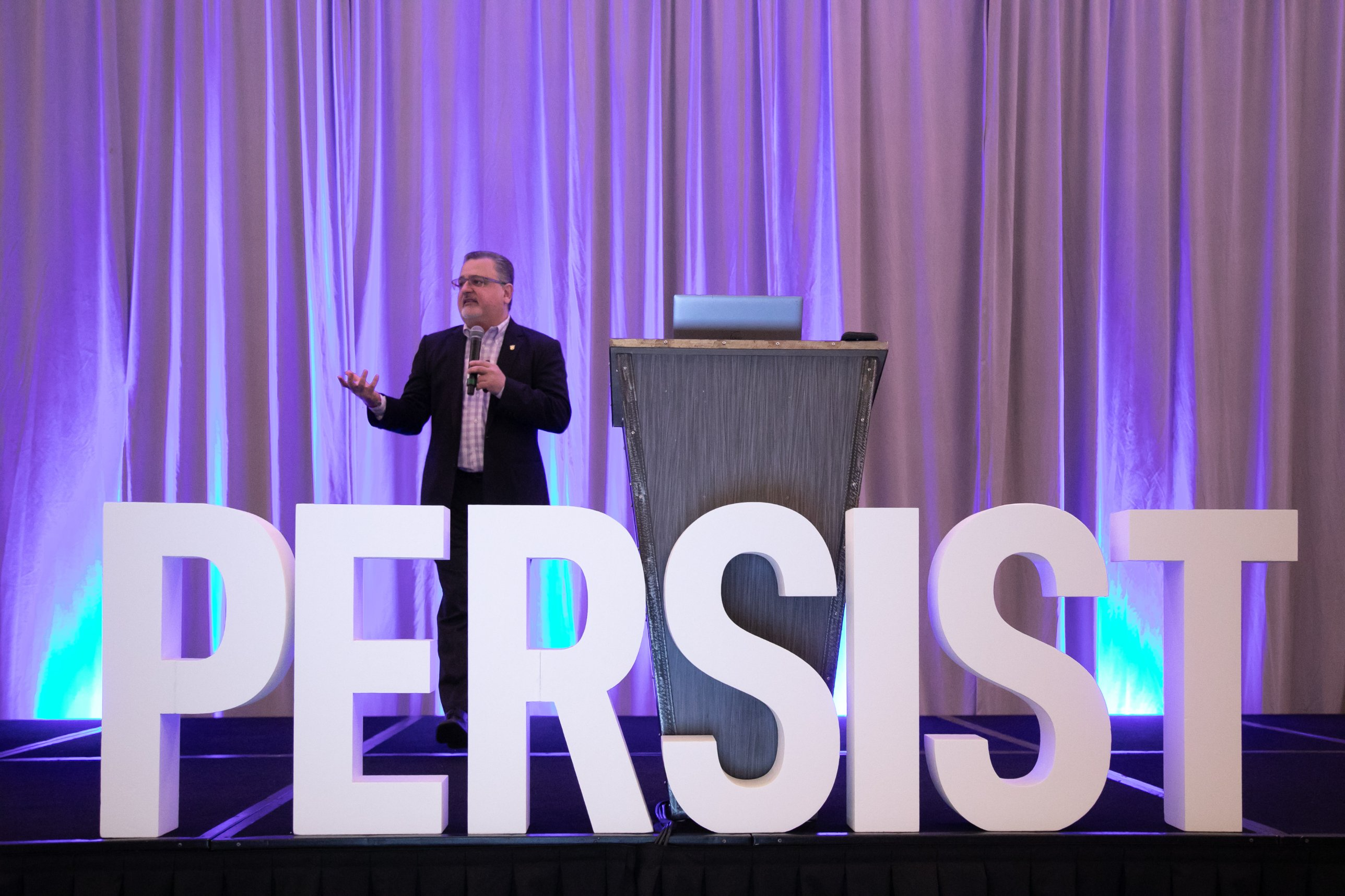
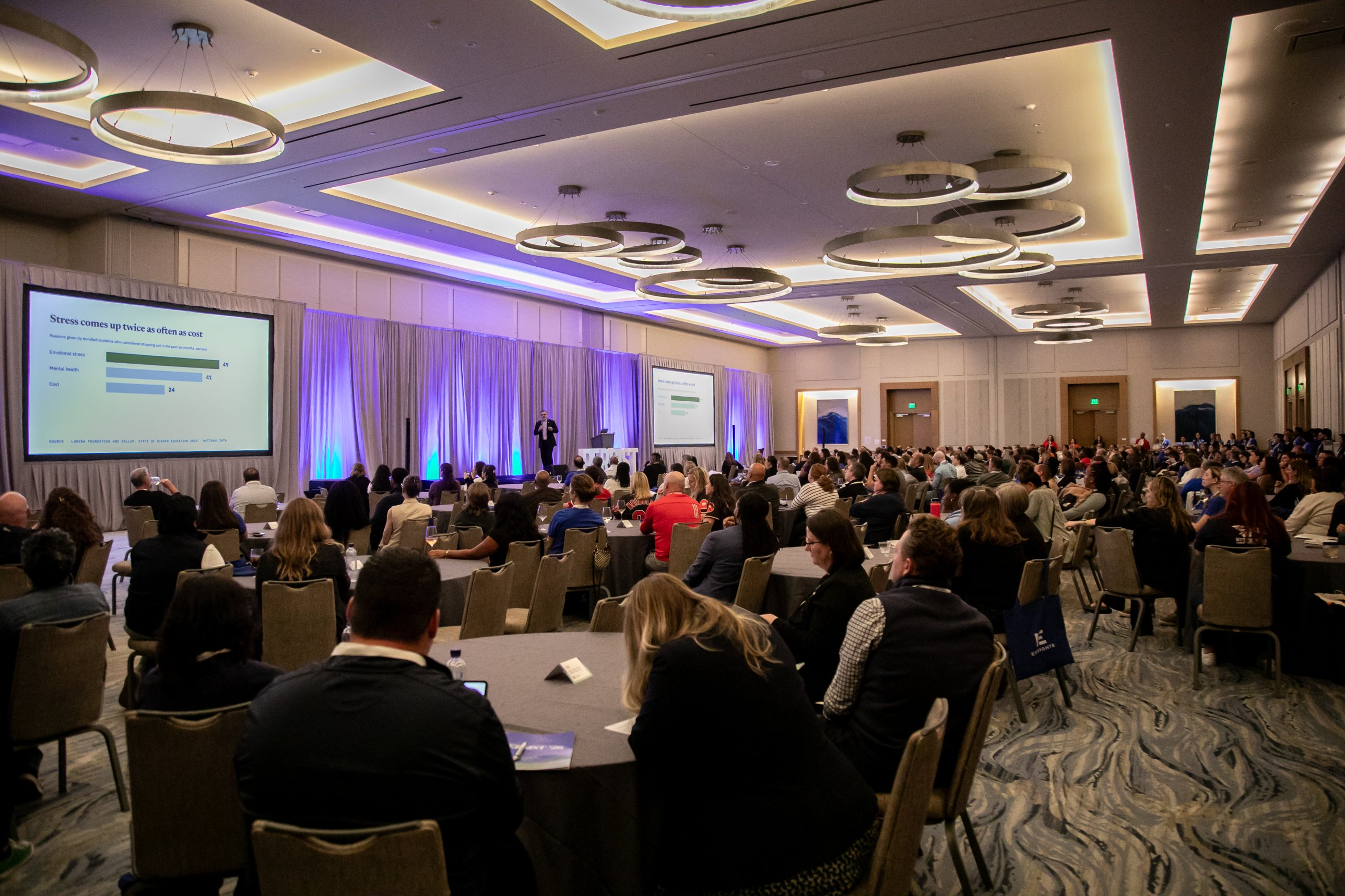
Dr. Khoury opened PERSIST on Sunday night by showing how Unity Environmental University serves more than 10,000 learners, most of them working adults studying online. He described a pattern most leaders will recognize. Students rarely leave over one big thing. They drift. National data shows the pressure behind that drift and what it costs:
- Pressure builds quietly. Among enrolled students who considered leaving college in the past six months, emotional stress (49%) and mental health (41%) were cited far more often than cost (24%), according to Lumina Foundation and Gallup.
- The cost of drift is large. 37.6 million working-age Americans started college and left without a credential, according to the National Student Clearinghouse Research Center.
His question for the room: What changes when every student is known at the hour they need help, before they decide to leave? Unity's answer is Spruce, an AI-powered texting system that has answered student questions by text at every hour since September 2023 and checks in with students proactively. In one example, Spruce opened by asking a student how they were feeling about the term. The student replied that a recent promotion left less time and they were not sure they could balance it all. Spruce flagged the message for an advisor, so the student never had to ask for help. Over twelve months, the results included:
- Spruce reached 97% of Unity students with check-ins.
- 370 of the 882 students who said they might not come back are still enrolled and taking classes.
- Spruce handles log-in help, deadlines, and links to resources, and advisors step in when a student may not come back, a class is not working, or there is a mental health or safety alert.
Dr. Khoury also looked ahead.
- Una, a newer AI assistant, went live in 2025. The goal is one assistant that knows each learner from first inquiry to graduation.
- He laid out three ways AI could change how institutions work by 2028 and 2029 (a plateau, a steady climb, or a step change) and asked which moves make sense in all three.
- A plateau: better assistants, same org charts.
- A steady climb: agents handle multi-week tasks, and roles are reshaped.
- A step change: expert-level AI at scale and fast restructuring.
Georgia State asked itself if the institution was the problem, improved summer melt in the process
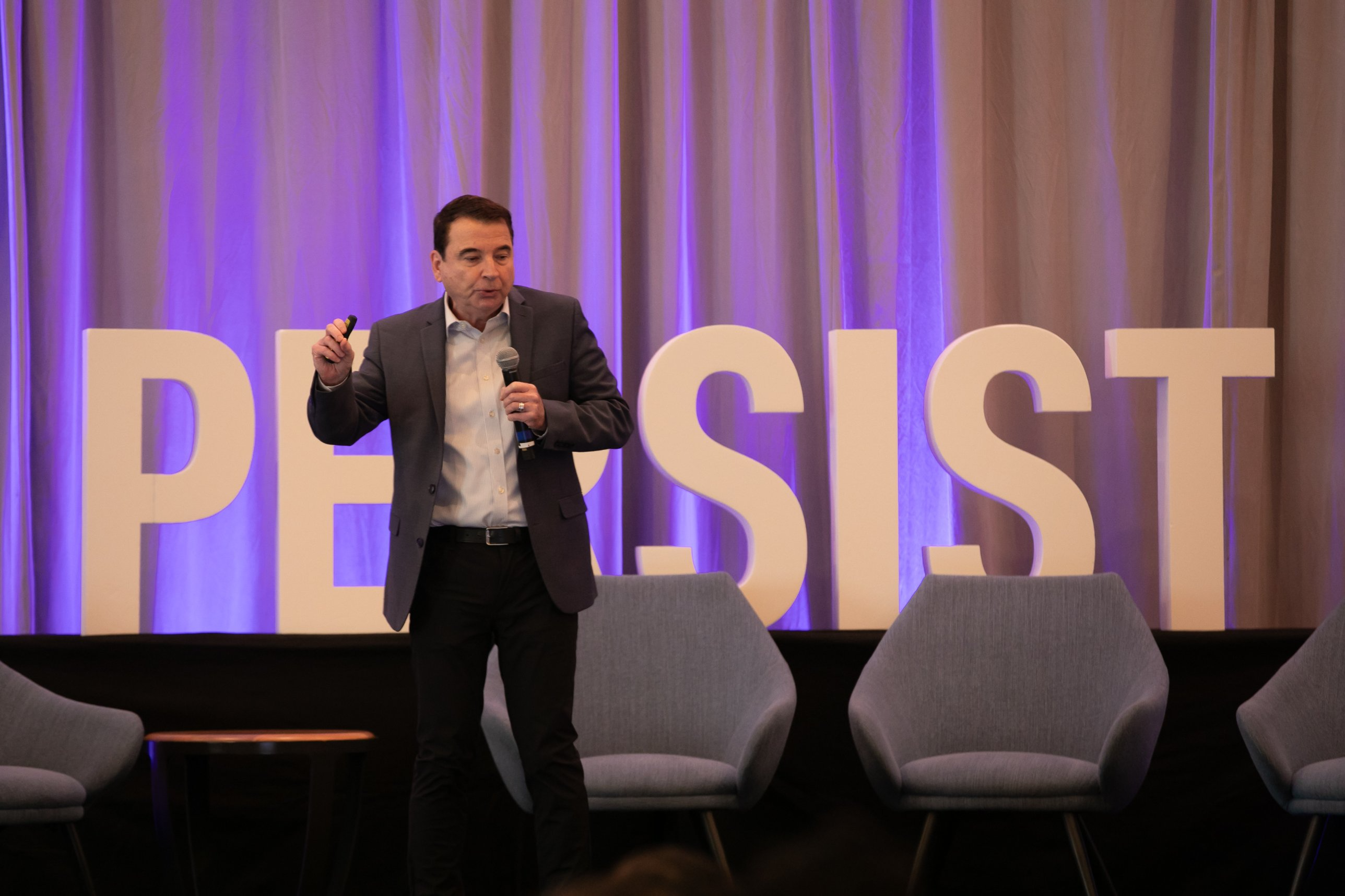
Dr. Renick opened Monday morning's program with the story of Georgia State University, which serves 53,000 students across six metro Atlanta campuses, most of whom are non-white and low-income students. In summer 2015, 19% of confirmed freshmen never showed up in the fall. Hidden steps stood in their way, including financial aid verification, proof of immunization, placement exams, and class registration. Georgia State added AI-enhanced texting support that answered questions around the clock and guided students through each next step, and the results followed.
- Summer melt fell 57%, which put 360+ more students in seats each year.
- FAFSA completion rose 16% and early fall class registration rose 14%.
- Students dropped for non-payment fell 36%.
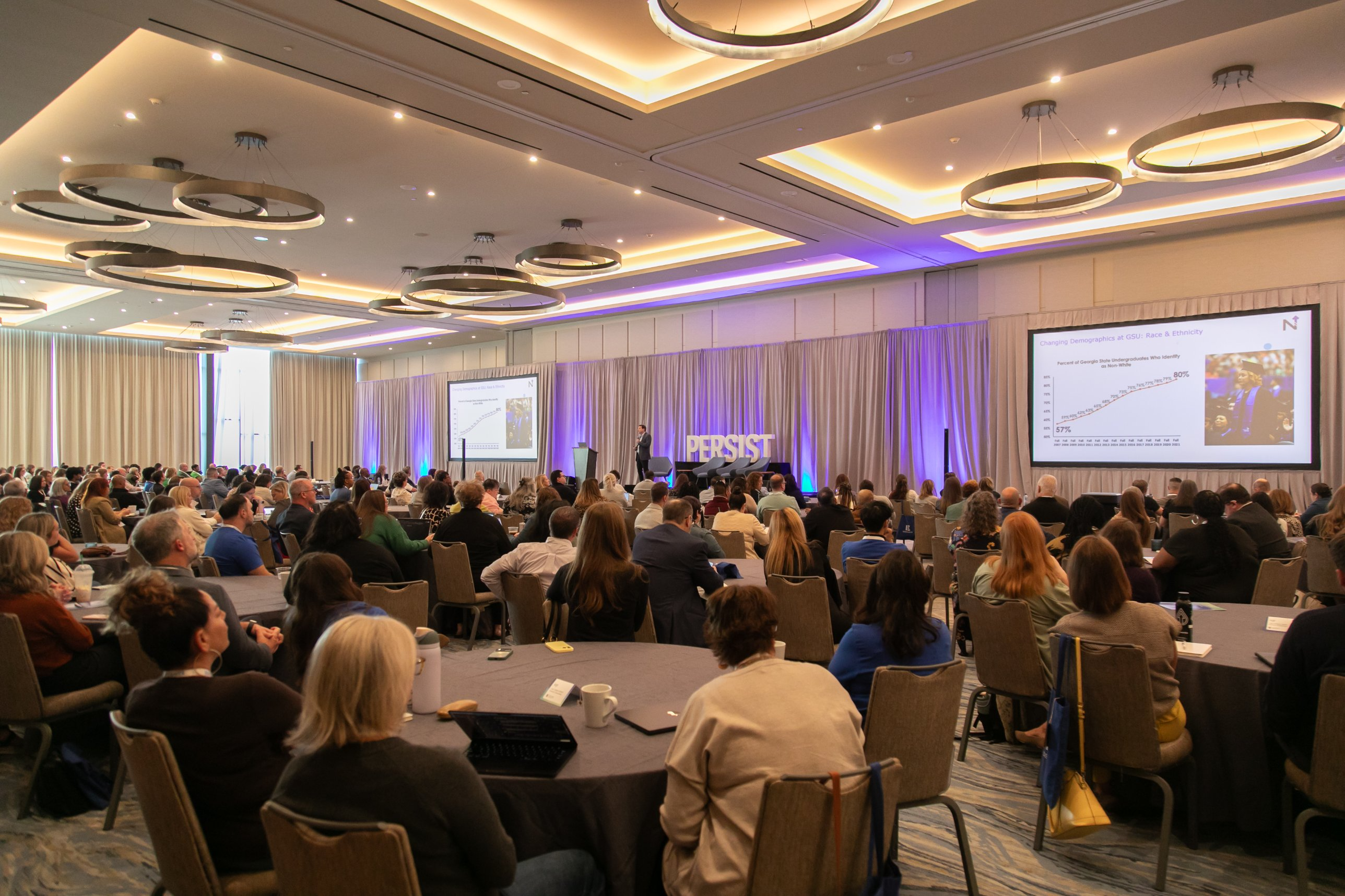
Georgia State then turned to the choices students face once they arrive. Graduating seniors in 2010 had cycled through 2.6 majors on average. To combat this, the university established 7 meta-majors,
- broad groups of related majors such as business, health professions, and STEM. This gave students clearer paths within larger interest areas, and changes of major after the first year fell 32%.
Support that starts early keeps paying off after graduation
These changes paid off for Georgia State. A six-year randomized trial of advising guided by predictive data at Georgia State, published by the research nonprofit Ithaka S+R in 2023, found graduation rates rose 7 percentage points overall and 15 points for Black students. Additionally:
- Annual undergraduate degrees grew 84%, from 4,222 in 2010-11 to 7,758 in 2020-21.
- Students with at least a year and a half of advising were about twice as likely to be working in a job related to their degree one year after graduating.
- Students with four years of proactive advising were more than twice as likely to hold a management or executive role eight years after enrolling, at 27% compared with 13%.
The National Institute for Student Success, founded by Dr. Renick, now shares this work with 171 institutions across 34 states.
Both keynotes pointed to the same compass. Campuses that listen early and act first keep more students, and what students say today shows where friction will build next.
Curious how to make student voice your compass? Learn more here!


See what EdSights can do for your team


